Celebrate Mars rover Curiosity landing by seeing Mars tonight.

TONIGHT FORAUGUST 6, 2012
 Courtesy U.S. Naval Observatory
All congratulations to NASA’s Mars Curiosity rover today, shown in an artist’s concept on Mars’ surface at the top of this post. This SUV-sized rover – the largest NASA has placed on Mars – successfully accomplished its daring landing on the Red Planet at 10:31 p.m. Pacific Daylight Time on August 5 (5:31 UTC on August 6, 2012). Meanwhile, tonight, as darkness falls, youcan easily find Mars in the night sky.

In early August 2012, the planet Mars makes a conspicuous triangle in the southwest to west after sunset with two other objects – the planet Saturn and bright star Spica. Watch for them aon August 6, to celebrate the new Mars Curiosity rover’s daring and successful landing on the Red Planet.
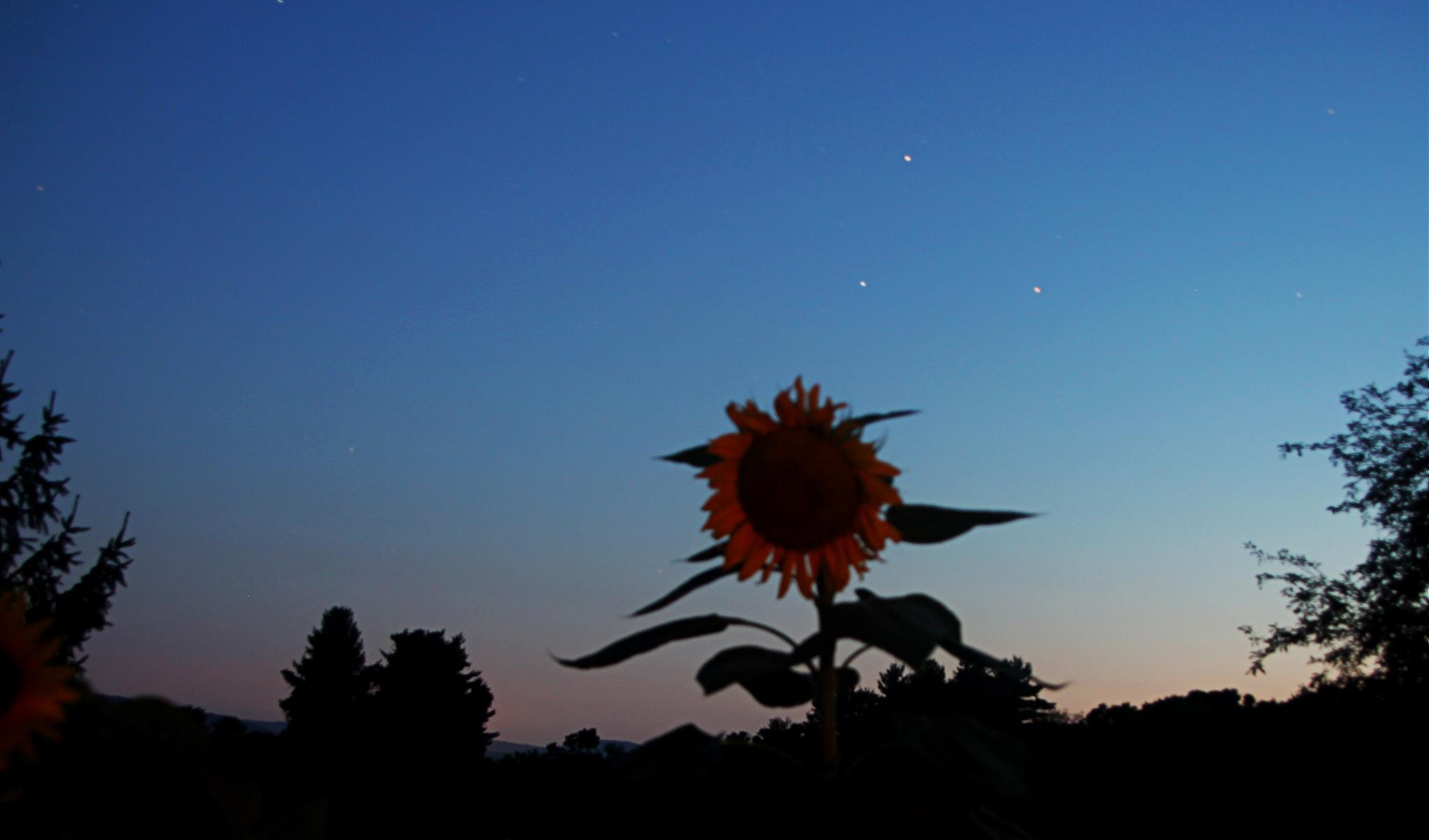
Mars (right), Saturn (above) and the star Spica in the evening sky on August 4, 2012. This cool image by EarthSky Facebook friend Eileen Claffey. You can see these same planets and this star – still in a triangle – on August 6 if you look west after sunset. Thank you, Eileen!

Mars (right), Saturn (above) and the star Spica in the evening sky on August 4, 2012. – night of Curiosity’s historic landing on Mars. People all around the world can see this trio tonight, too. Look west after sunset. Photo from EarthSky Facebook friend Migizi Gichigumi in northern Wisconsin. Thank you, Migizi! Click here to expand image
Look for Mars in a triangle with two other objects – the planet Saturn and star Spica. They will pop out fairly low in the southwest sky after sunset. At more southerly latitudes, look for the threesome to appear in a more westerly direction. All across the globe, however, the close-knit trio of lights should be pretty conspicuous at nightfall.
It’ll be fun to watch Mars with with respect to Saturn and Spica in the coming week. In a little more than a week from now, the red planet Mars will pass right in between the ringed planet Saturn and Spica, which, by the way, is the brightest star in the constellation Virgo the Maiden. And in just a few days, all three luminaries will be close enough to fit – or nearly fit – within a single binocular field. On August 20 and August 21, the young crescent moon will return to this part of the sky, joining these planets and this star.
Mars is nearly on the far side of the sun from Earth now, over 150 million miles away. That means it takes the signal from NASA’s new Mars rover Curiosity 13.8 minutes to reach Earth.
By the way, as you gaze at this trio of objects in the night sky, you might remember that Mars is closer than Saturn (83 light-minutes away) or Spica (260 light-years away.
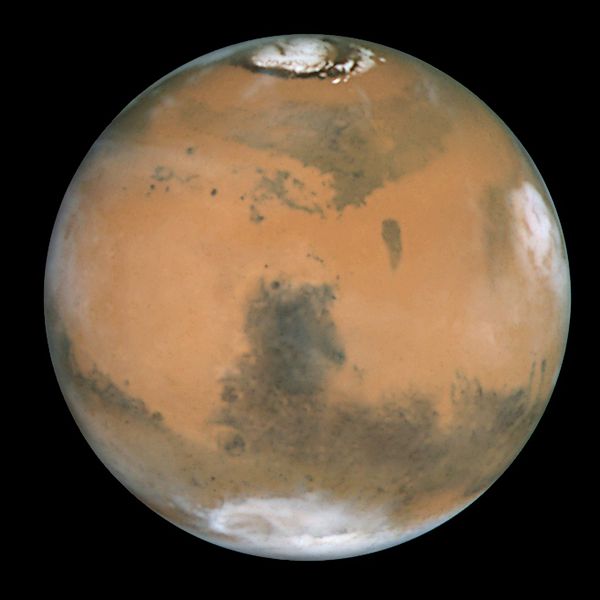
The planet Mars – ripe for exploration. It’s the world most like Earth in our solar system, with a thin atmosphere and a nearly-24-hour day.
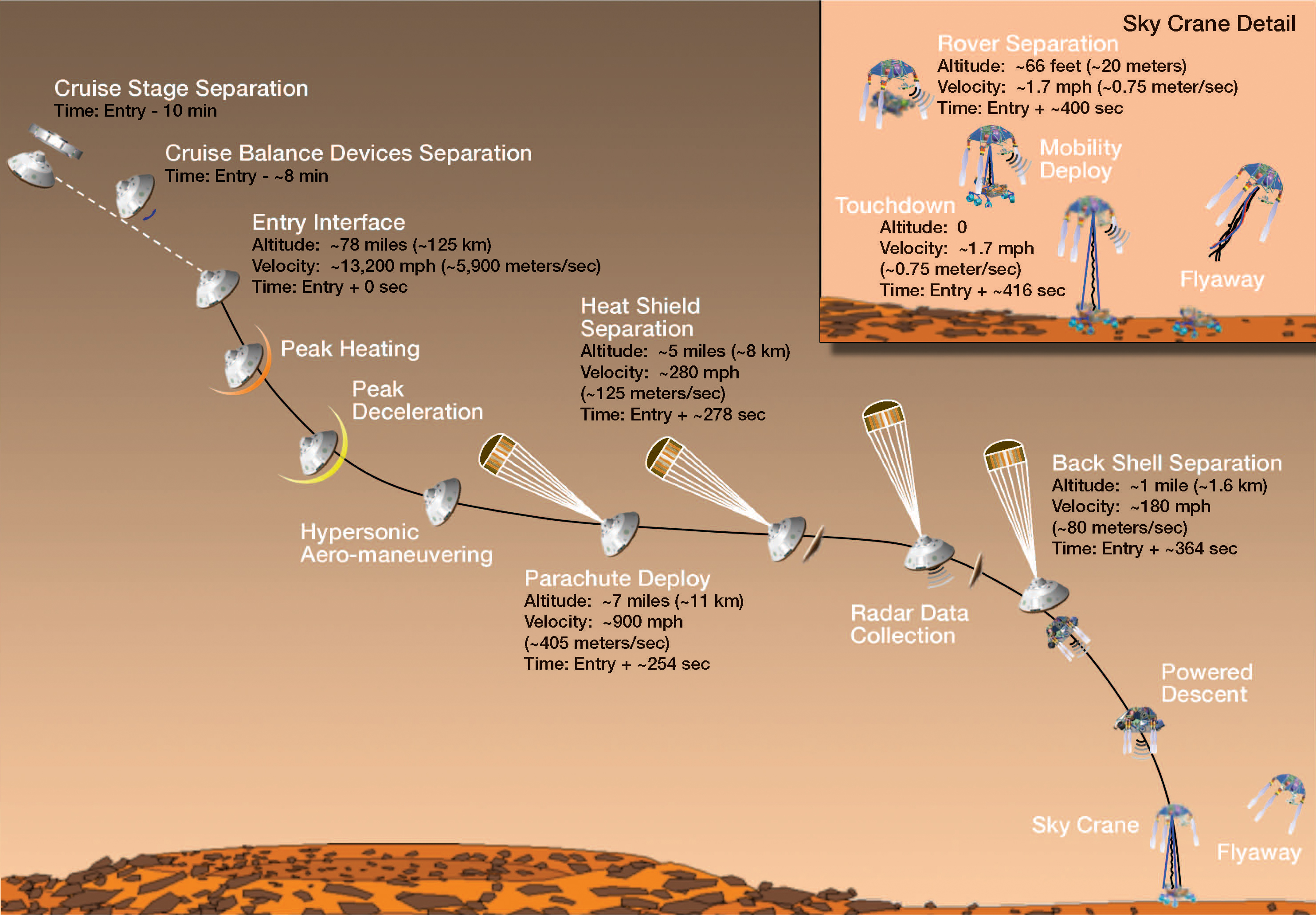
Curiosity will attempt to land on Mars – in a daring and unprecedented series of steps involving pyrotechnics, a parachute, and a skycrane to give the rover a soft landing on Mars’ surface – at 10:31 p.m. Pacific Daylight Time on August 5 (5:31 UTC on August 6, 2012).
As you peer at Mars in the night sky, NASA’s Curiosity rover – the centerpiece of the Mars Science Laboratory mission – is checking out its systems, after an unprecedented landing on Mars. This rover is larger than previous rovers. It is a 1-ton robot – about the mass of an SUV – and landing it on Mars without kicking up dust (which could harm its delicate instruments) was a serious engineering challenge. The excellent video below shows how the risky maneuver kept rover team members in suspense for 7 fateful minutes. Don’t miss this video!
Bottom line: Find Mars in the night sky tonight – August 6, 2012 – day of the historic landing of the NASA’s new Mars Curiosity rover on the Red Planet’s surface. The planet makes a triangle with two other night sky objects. One is another planet, Saturn. The other is the star Spica. You’ll find them all in the southwest to west after sunset.
MORE FROM EARTH SKY
FROM AROUND THE WEB
- 7 Habits of Highly Frugal People (MoneyNing)
- Rising sea levels: It’s worse than you think (Grist Magazine)
- 8 Largest Giants of the Deep(Environmental Graffiti)
- Will Your Lungs Regenerate if you Quit Smoking?(HealthCentral.com)


5 Responses to Celebrate Mars rover Curiosity landing by seeing Mars tonight.